Wednesday, August 10, 2022

Engineering Marvels pt 2

Since the time of our arrival in Boncaygeon, we have been hearing about a growing backup of big boats (over 30’) at Big Chute.  Apparently, there are only two seasoned operators who have the experience and expertise to safely move big boats on the railway.  For some reason (another lock tender told us they were out with Covid🤷🏼‍♀️) no one was qualified to transport big boats for about 10 days.  By the end, there were 40+ ‘big boats’ backed up and waiting to get through.

Once again, time for us to slow down and spend a little more time in each location…
Three locks in a 1 mile distance…all in a nice straight line.


Orillia seems like the perfect town to explore for a few days!
We anchored right off the park, which includes a nice beach.

And luckily, this was the site of an awesome Scottish festival.

On Friday nights they close the main street to traffic so shops and restaurants can expand outdoors.

We didn’t patronize this particular shop, but during our three day visit we put quite a few miles on our bikes and really cruised from one end of the town to the other.  One afternoon we set out on a mission to find wifi (for the posting of a blog), and after three attempts (which included a lot of coffee and donuts), we finally found a business with an adequate connection to handle our upload…thank you Starbucks!

Word is the Big Chute is open for ‘big boat’ business again, so it’s time to mosey along.
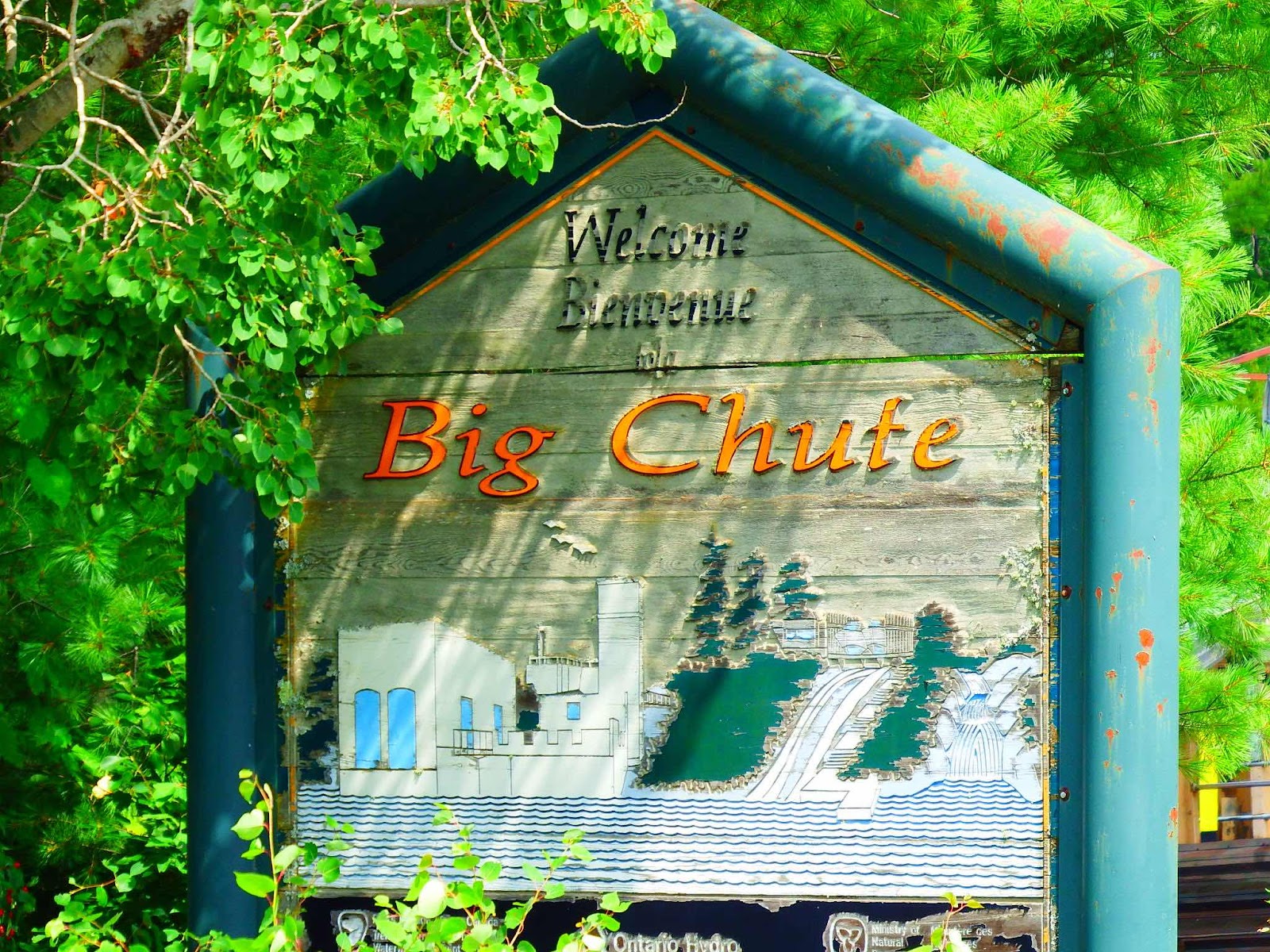
We arrived on a Sunday, knowing that ‘big boats’ were only being transported on weekday, but we wanted to walk around and get a feel for how things worked.  We were boat #11 in the line for the next day.


A bit of history is warranted here since this is the only marine railway, of this kind, still in use in North America!  

In 1914, plans were made to build three locks (#43 Swift Rapids, #44 Big Chute, and #45 Port Severn) to connect the Severn to Georgian Bay.  Construction on the Port Severn lock started first, while ‘temporary’ railways were constructed at Big Chute and Swift Rapids.  World War I halted construction plans for locks 44 and 45, but Port Severn was completed, and is still in operation today. In 1964 the Swift Rapids railway was replaced with a conventional lock, and plans were made for a single lock at Big Chute.  

However…” Before construction began the sea lamprey, which had been devastating the fishing industry in the Great Lakes, was found in
Gloucester Pool- at the bottom of the railway-and plans were put on hold. Several impractical ideas were suggested, but
no practical solution could be found. By the end of the 1960s, the old marine railway could not keep up with the amount of
boating traffic in the area. Long lines formed at either end of the railway, with waits often being overnight. Research was done
to find a way to prevent the migration of the sea lamprey into Lake Couchiching and Lake Simcoe, while still effectively
increasing the flow of traffic. A biologist sat at the bottom of the railway for days, checking the bottom of boats that locked
through, and finally saw a lamprey attached to the bottom of a boat. The lamprey fell off after less than 6 meters, so the
railway was determined to be effective at preventing the sea lamprey's migration. In 1976, it was finally decided that a new,
enlarged railway would be built. The current carriage was opened to the public in 1978, and can carry a boat up to 100 feet…” (Wikipedia)
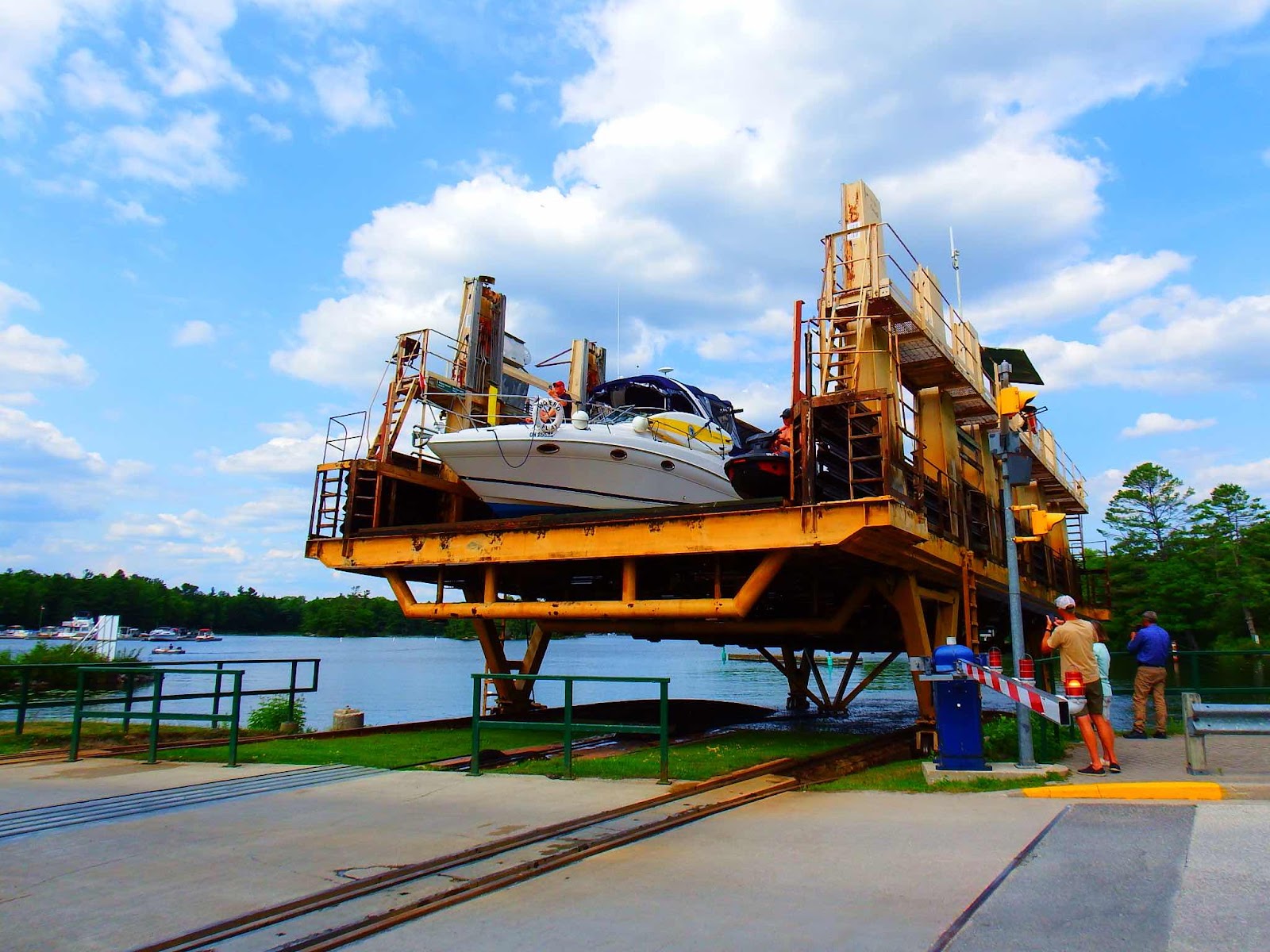
The first rail car, we witnessed, carried 4 vessels at one time (3 boats & 1 jet ski). The car comes out of the water and crosses a road…

Then down the hill they go.  If you look closely, you can see that the rollers in the rear run on a different track than the front rollers.  This is designed to keep the rail car level during the descent.  You might also notice that now the cables are working to slow the rail car, and keep it from picking up too much speed before it hits the water below.

Once everyone is back in the water, they lower the roller arms that divided the sling straps, and cables pull the straps into a groove to ensure they are well protected from props.  The entire ref lost process only takes a few minutes, and everyone is on their way again.

The mechanisms that power the cable system are located in the building on the right.

This was the boat in front of us.  Big boats are usually on the car alone.  You can see the small cables used to pull the straps in, once the boat is refloated. Also, in the upper right hand corner of the picture you can see a spool.  The operator uses that to roll cable in, or let cable out, as the car moves.

Yikes…it’s our turn!  Again, I drew helm duty🤷🏼‍♀️  Just put the boat in the slings.  The stress involved in this ‘lock’ was opposite of that in the lift locks.  Here, once we were hanging in the slings, and the engines were shut down, and that’s when my heart rate increased.  Prepare for an interesting ride.

The process was very seamless.  Within a few minutes we were out of the water.

Crossing over the road…


Here is a view from behind.  You can see two of the boats waiting on the ‘blue line’ for their turn. As well as, the road we just crossed, and the cables doing the work.
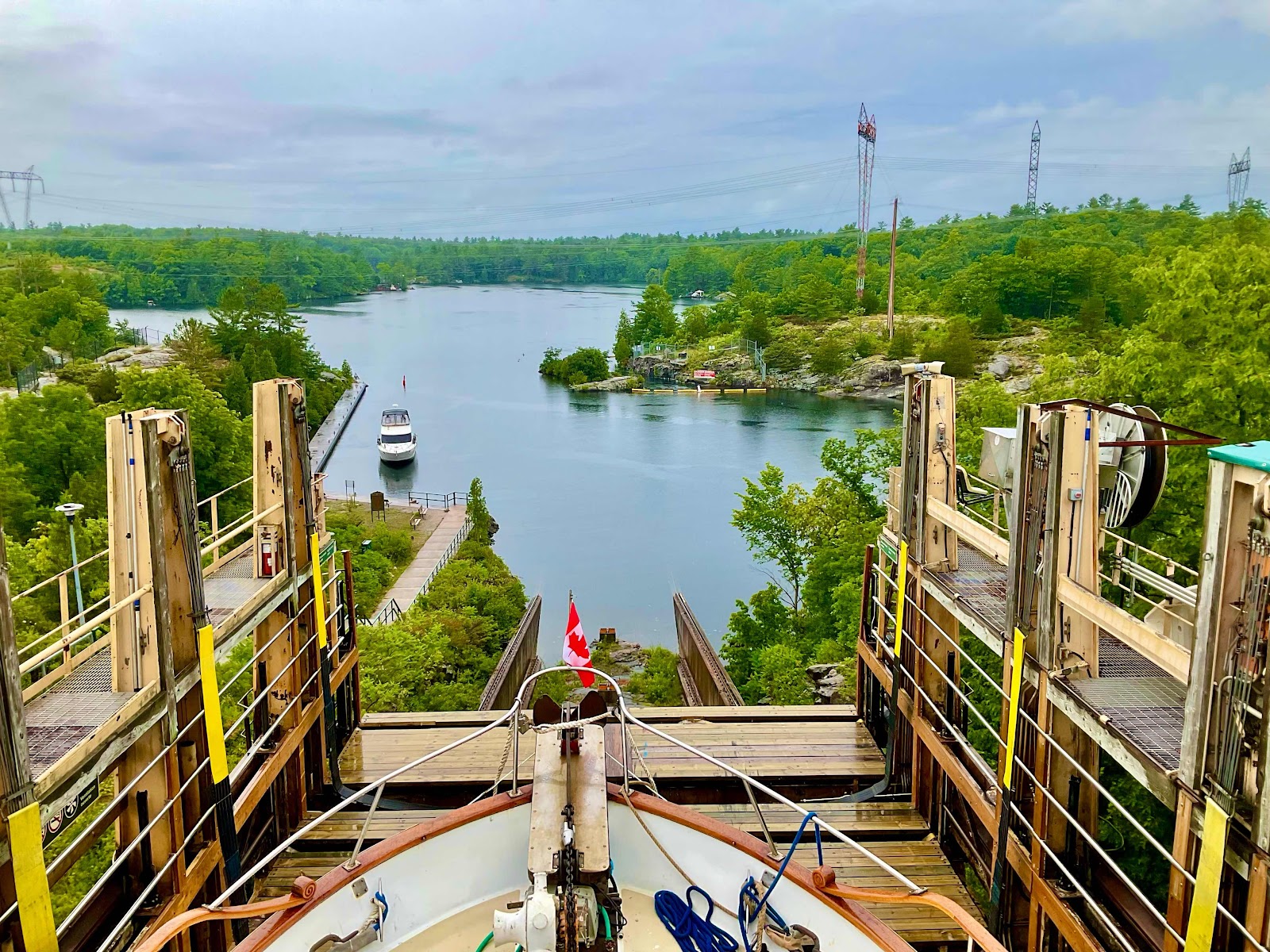

And as we are heading down the hill there is a big THUMP, THUMP with a shudder!  With heart rates back up, the operator explains that thick ice, this past winter, damaged the track in that spot😳 I think it provides him and his crew a little entertainment, watching the faces of the ‘people in the sling’.

And just like that, we are floating off the car, and on our way again…WOW, that was COOL!  The time stamp on our pictures shows us entering the sling at 11:13, and exiting at 11:24…that was an impressive 11 minutes!

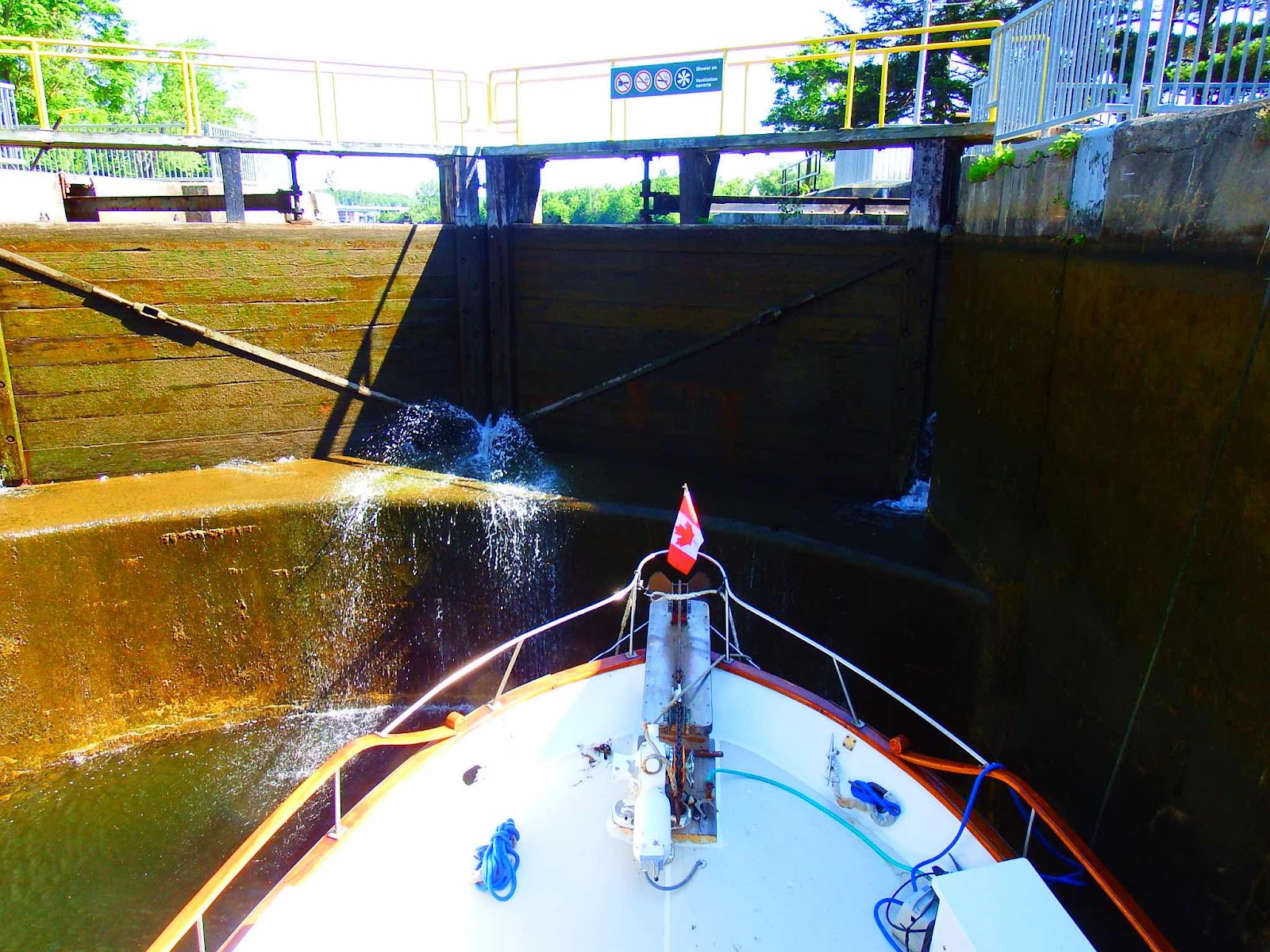
This is lock #45, Port Severn, the last lock in the Trent Severn Waterway.  Notice the sign on the gate showing that once we leave this lock, the navigation markers will flip sides. Farewell, Trent Severn and hello Georgian Bay!
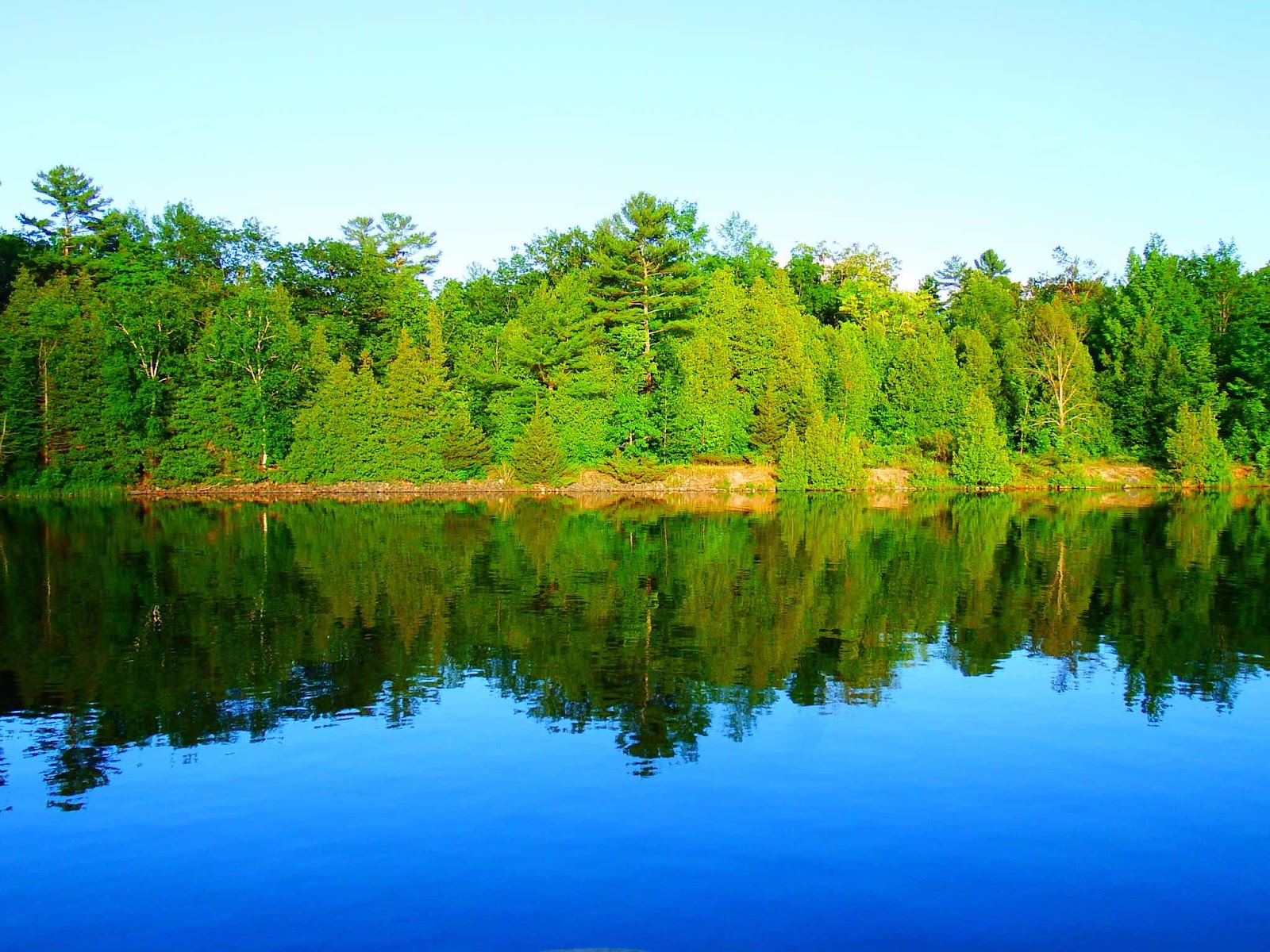

We thoroughly enjoyed our trip along the Trent Severn Waterway.  This was a very different cruising experience than what we are used to!  The people were fantastic! The towns were welcoming and happy to see us! And…the cruising itself was EASY!  No major worries about tides, winds, storms, waves, swell, or surge.  There were always numerous  options for overnight mooring…you can anchor on a lake, tie to a lock wall, or stay in a marina. 

 Even if you don’t own a boat, you could experience some of the beauty and wonder of the Trent Severn Waterway.  There are houseboats for rent on several of the lakes, and NO previous boating experience is necessary!  You read that correctly, and that is probably why encountering houseboats was the most stressful experience on the TSW.  They are notoriously hard to steer anyway, and add to that equation a little wind + a totally inexperienced captain, and you will understand why the locals call the houseboats ‘Harvey Wallbangers’😁
















Sunday, July 31, 2022

Engineering Marvels pt 1

The first lift lock was interesting, but not scary as we were entering from the bottom and being raised in elevation.

Exiting our first lift lock (Peterborough #21).

Loons!! And baby loons…awesome.  I love waking up to the sound of loons, it makes me giggle.

Our view most days in the Trent Severn Waterway.

I think this ‘Hell’s Gate’ is heavenly!
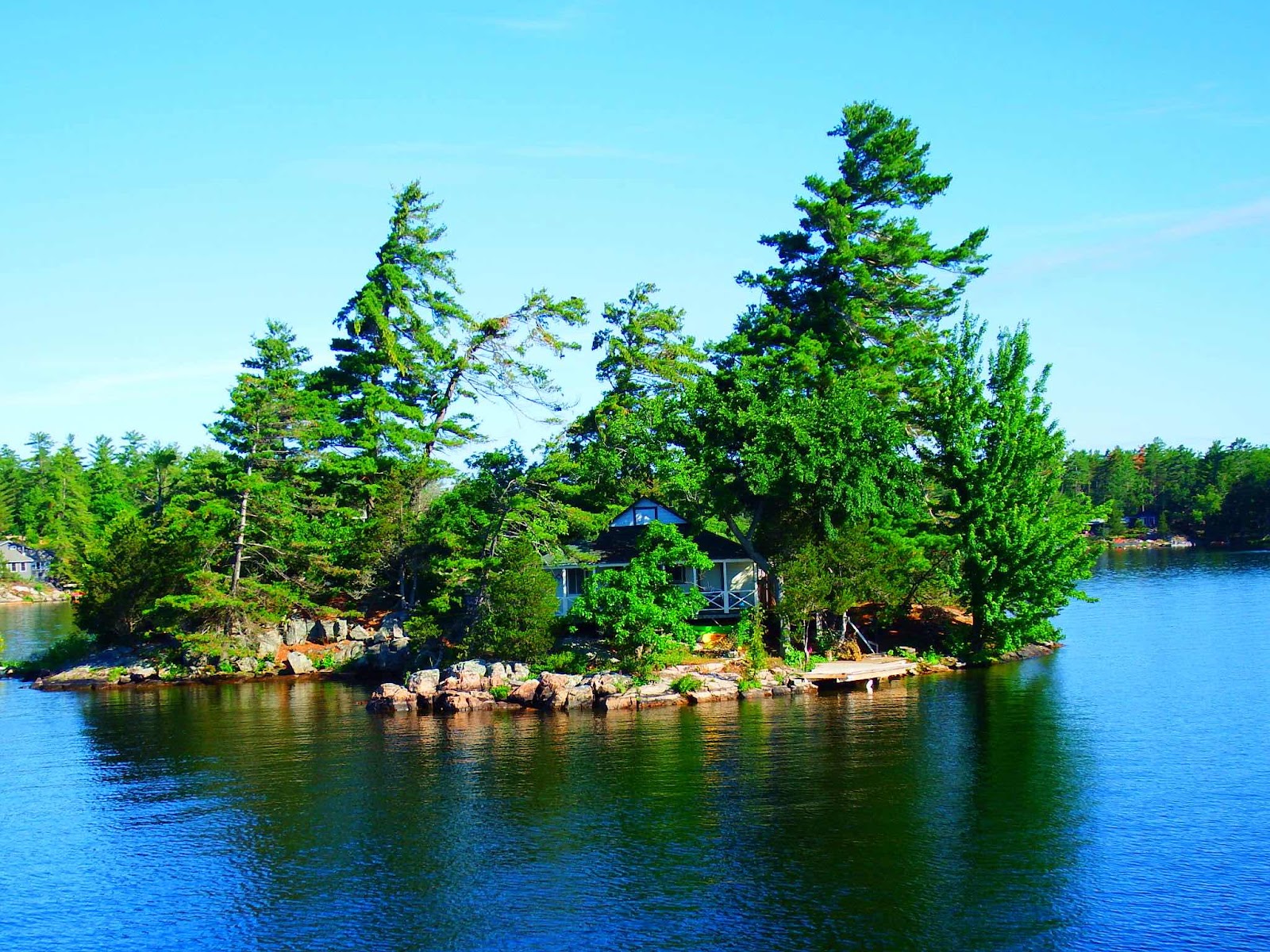
Most islands have a cottage.

The channel is very narrow and winding in places.

Some islands were really just a rock, luckily, this one had a few trees.

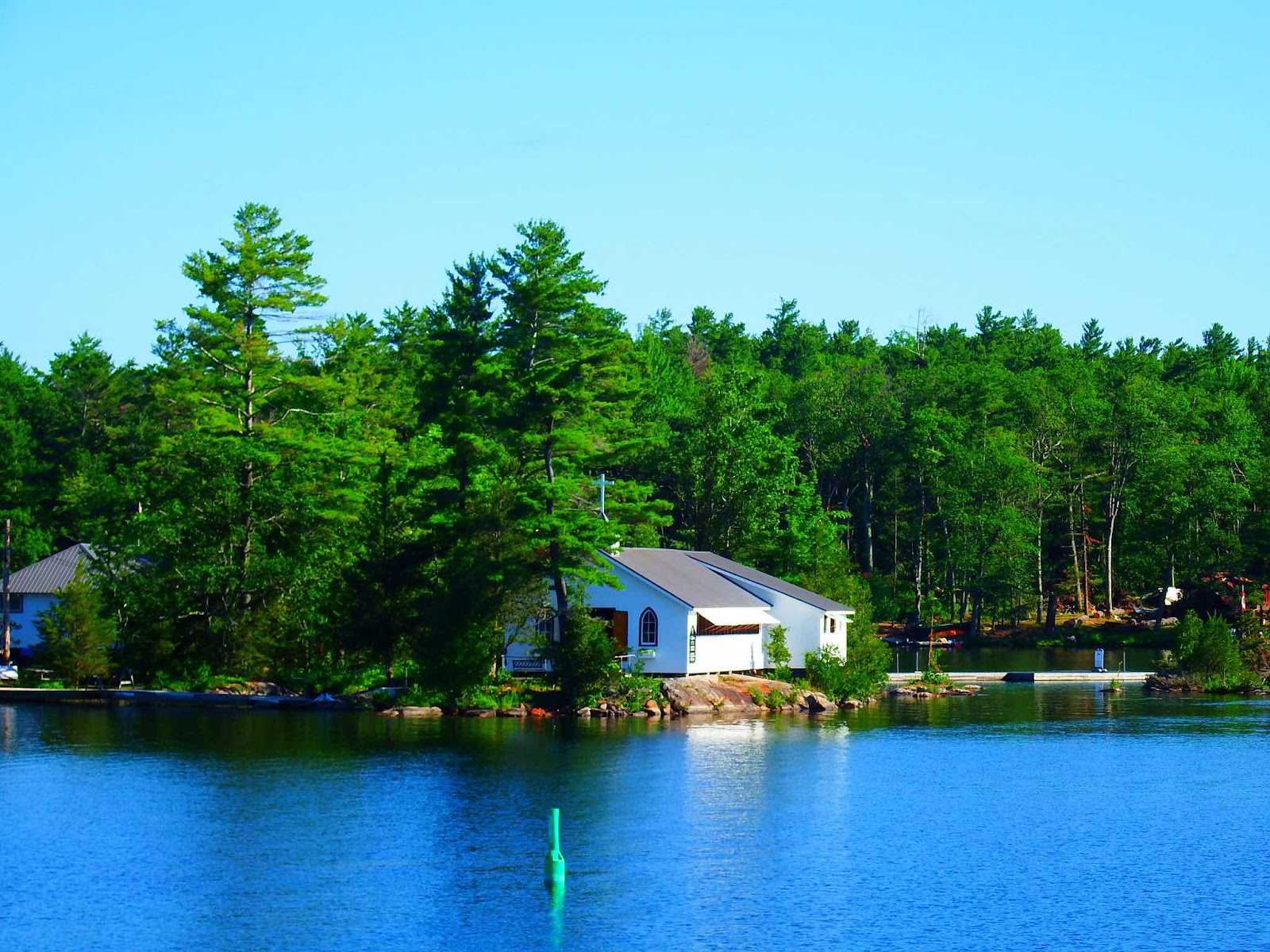
This church exemplifies the sense of community in this location of many islands.  There are no roads or cars here.  The dock on the right side of the church is the ‘parking lot’ for boats.

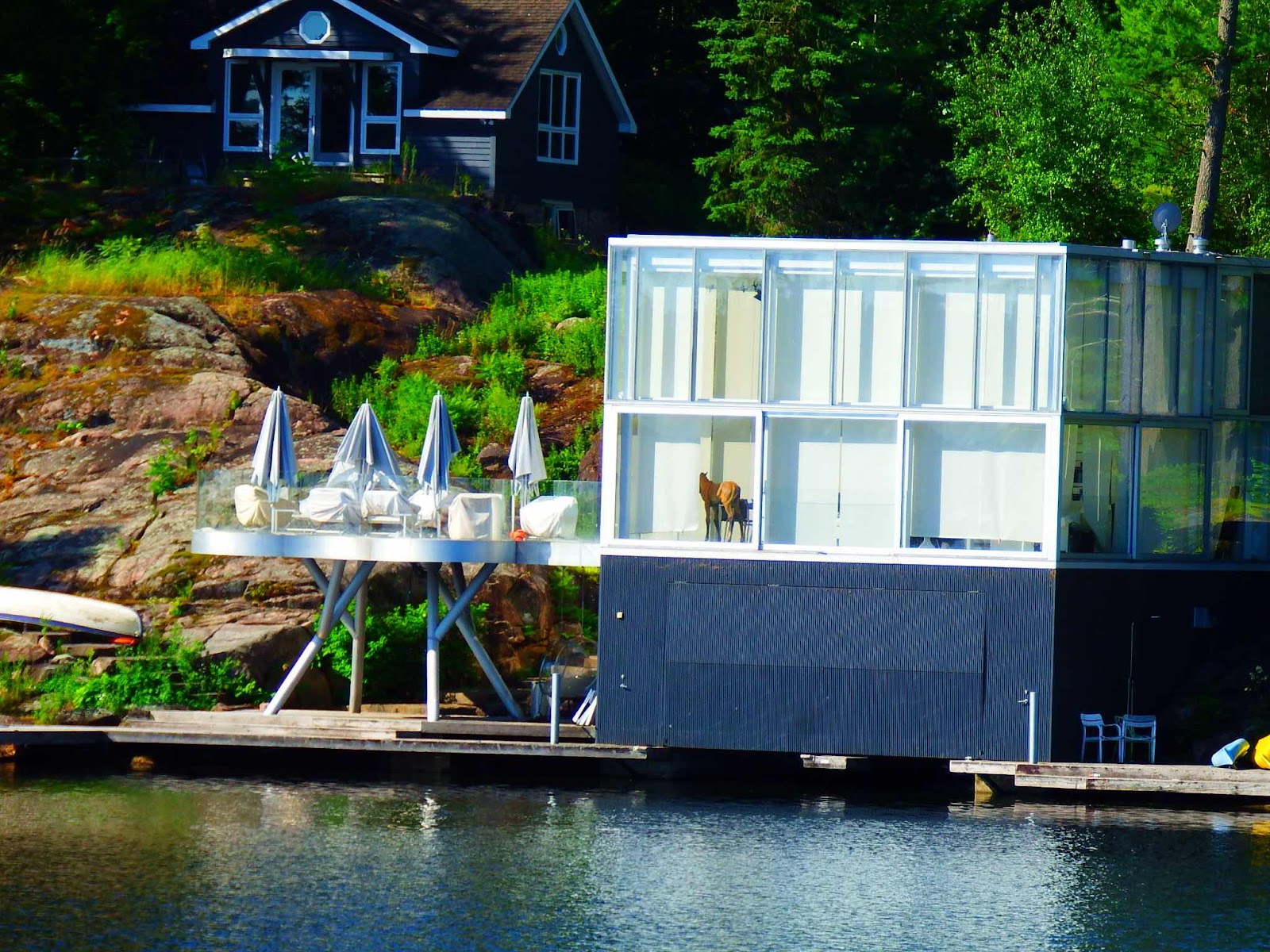
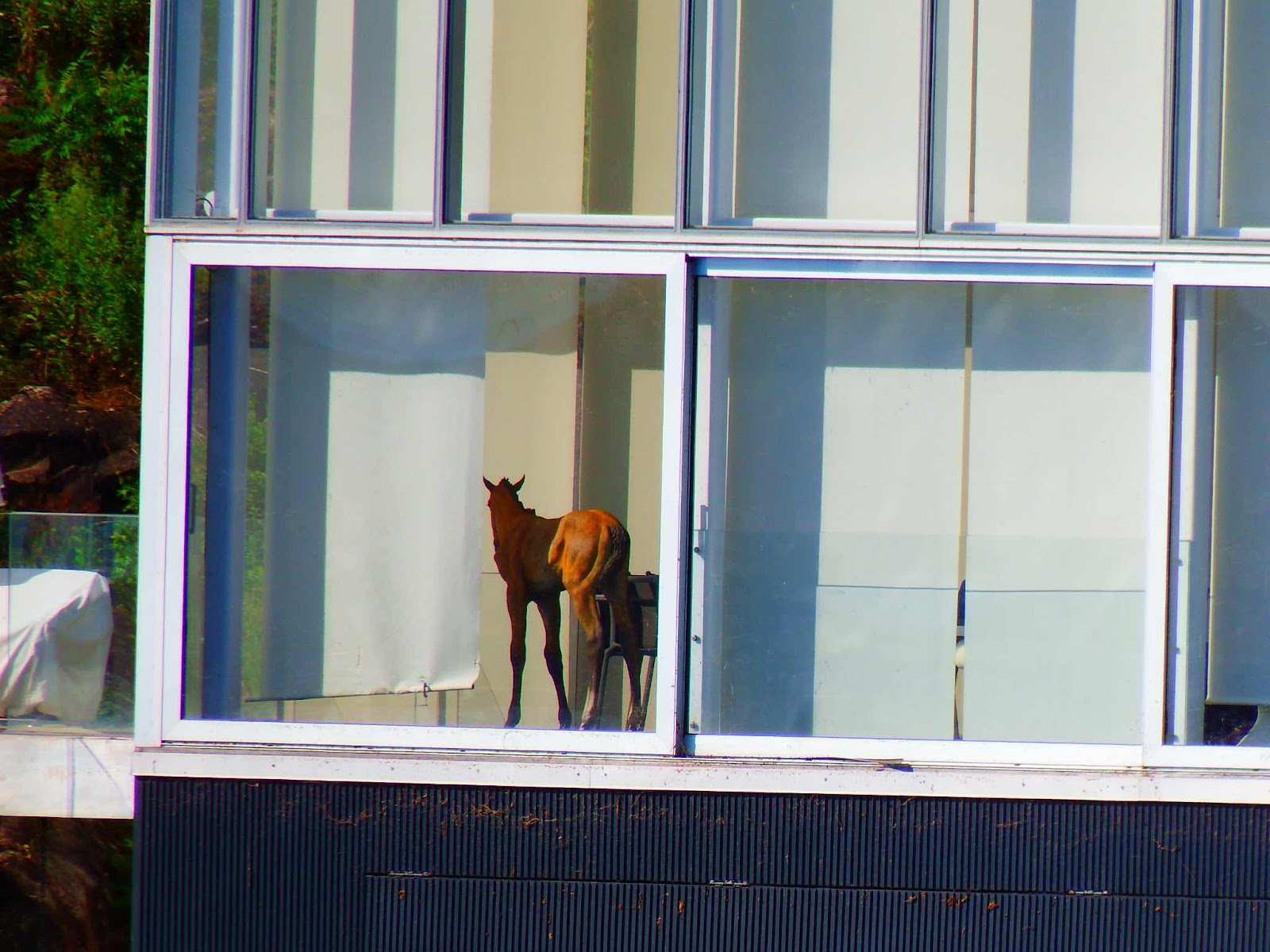
Some of the structures are unusual.  I was fascinated by the deck that looks like a huge folding table. Also, what is in the window?

Yep, it is a horses butt, or possibly a tiny moose?  Anyway…who taxidermies something like that?  It didn’t move, so it wasn’t a home invader.

Stopping in the small towns was great fun! 
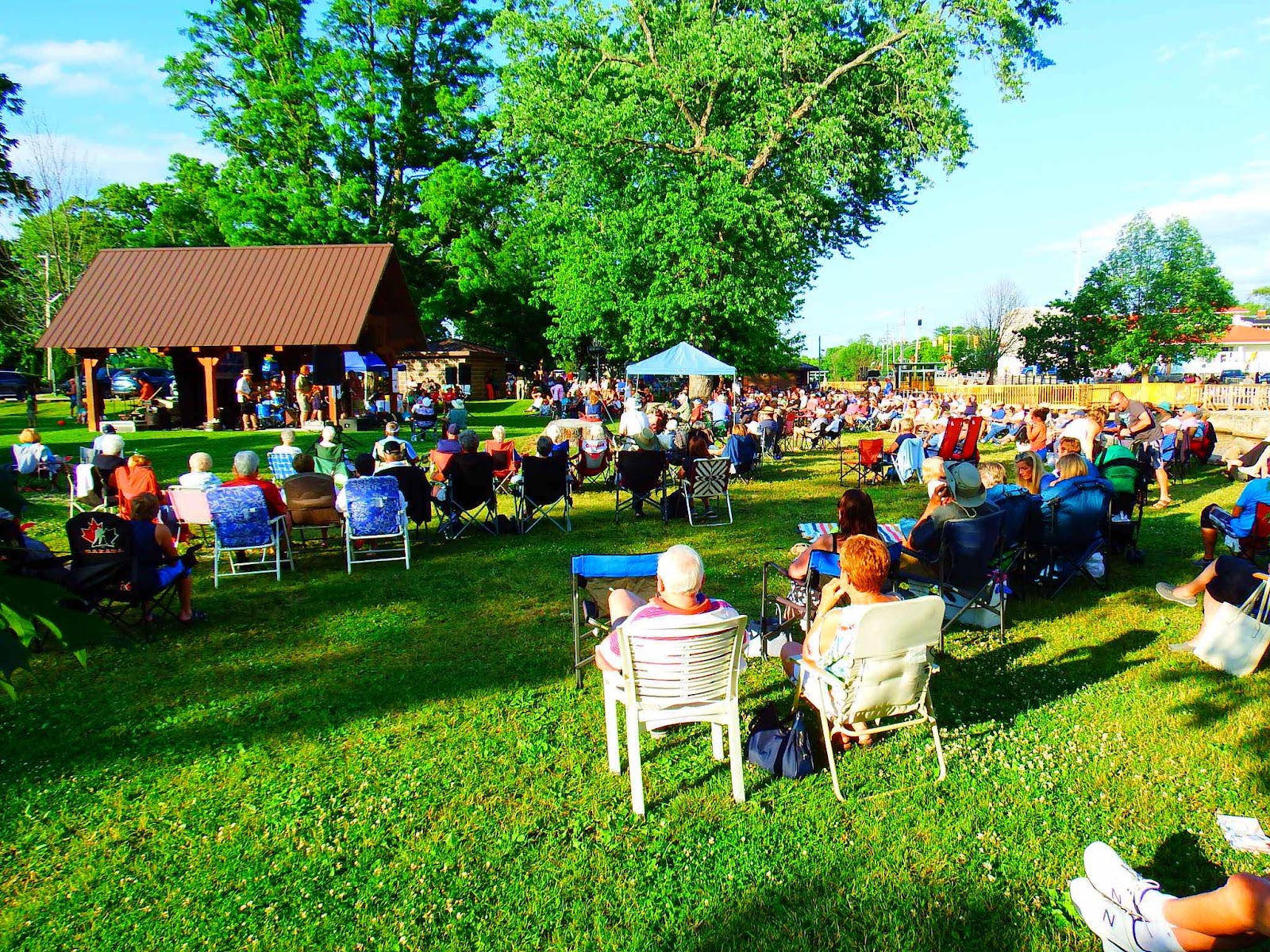
Bobcaygeon (pronounced Bob Cajun- even though a cruiser from Louisiana disagreed) was one of our favorite stops, with everything we needed, and more!  Every Thursday there is a free concert at the park, which is right next to the lock wall. Every Saturday there is an amazing farmers market a few blocks from the lock wall.

Everything is in bloom, and the lily pad fields are beautiful!

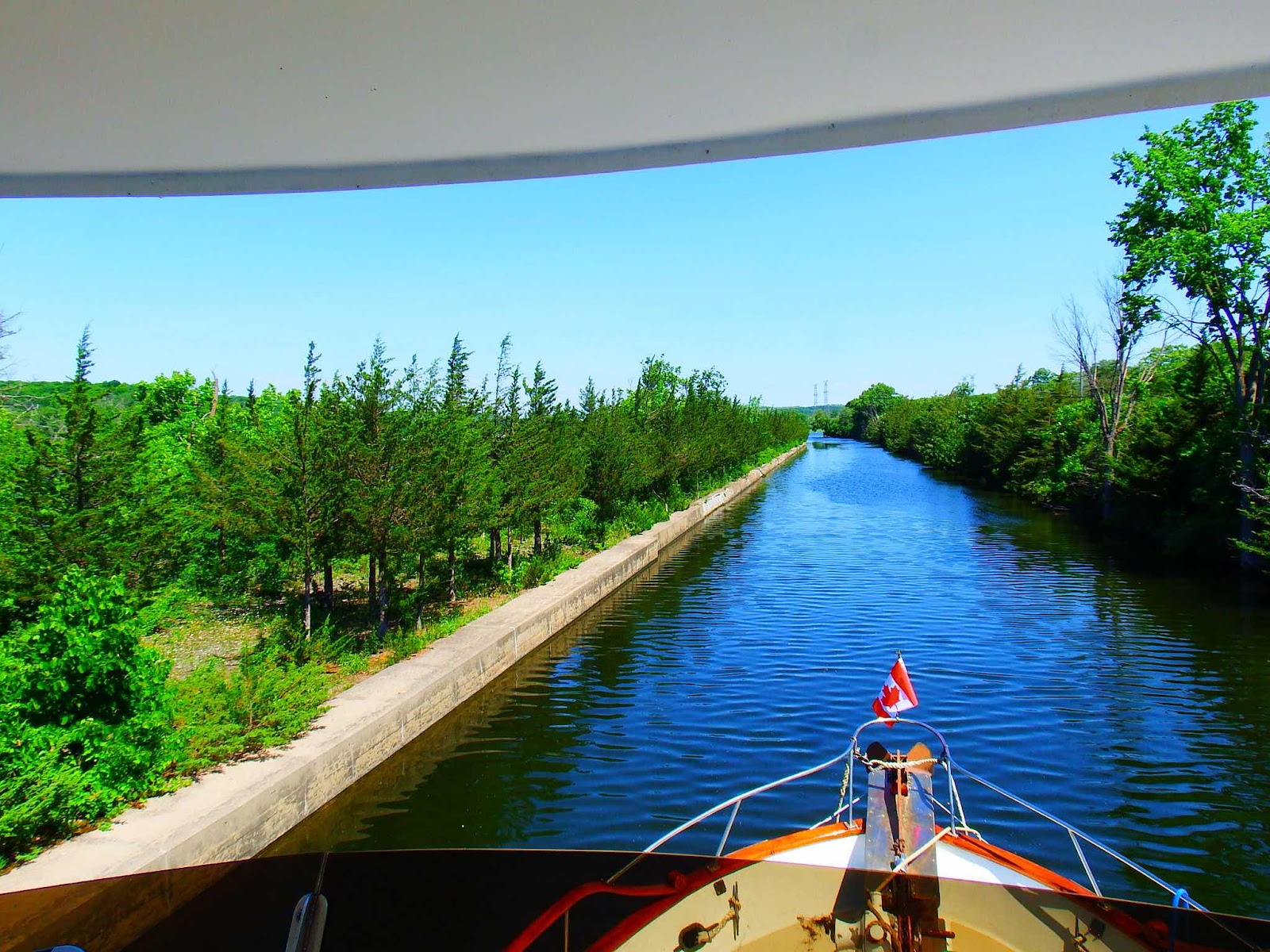
The Trent Canal is very narrow.

And the bank is very jagged and sharp, but I had to inch as close as I could get - to allow another boat to pass😬. Super happy there was to wind on this particular day!

And then we reached the point where our locks stopped going up, and started going down…
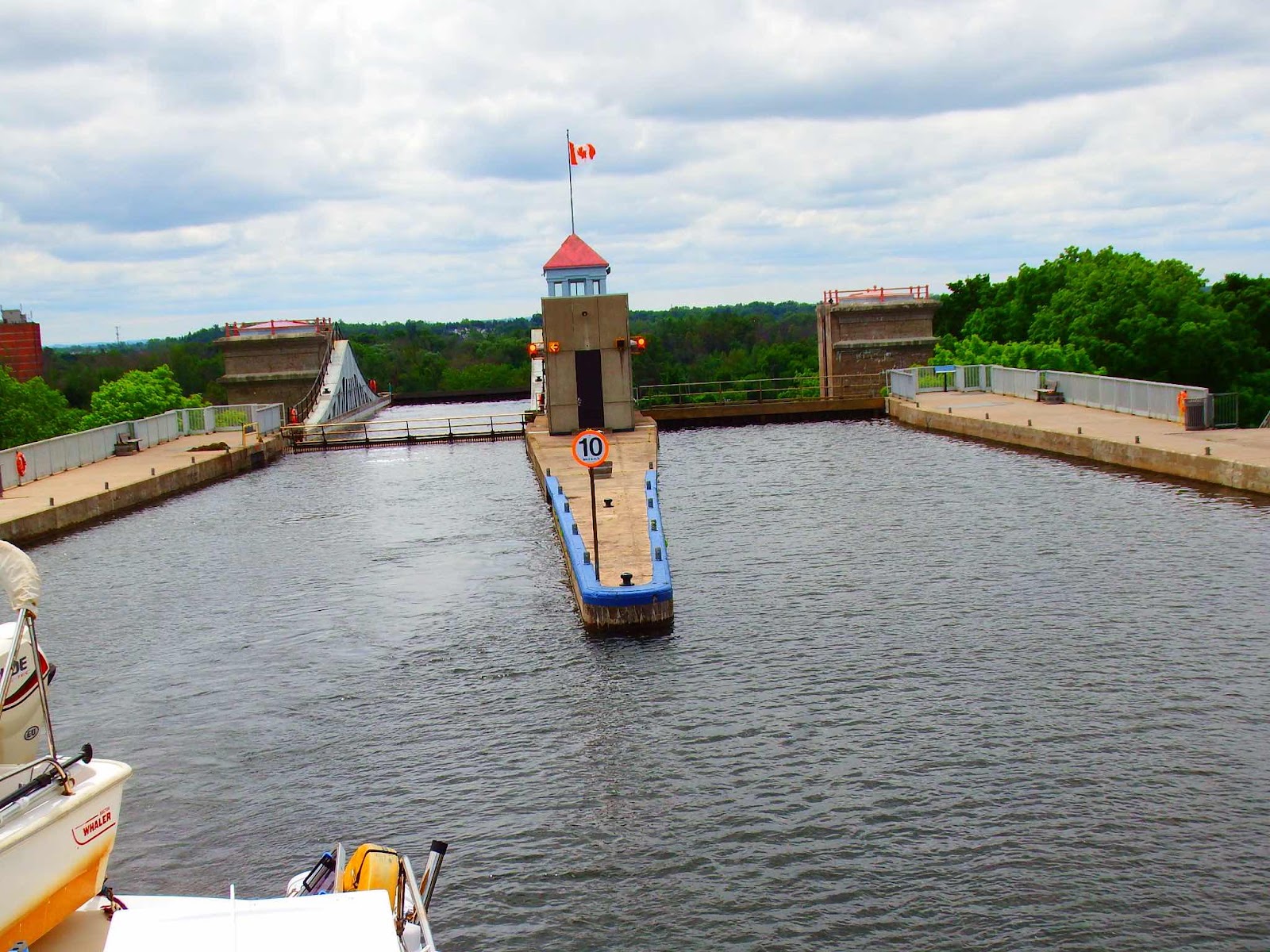
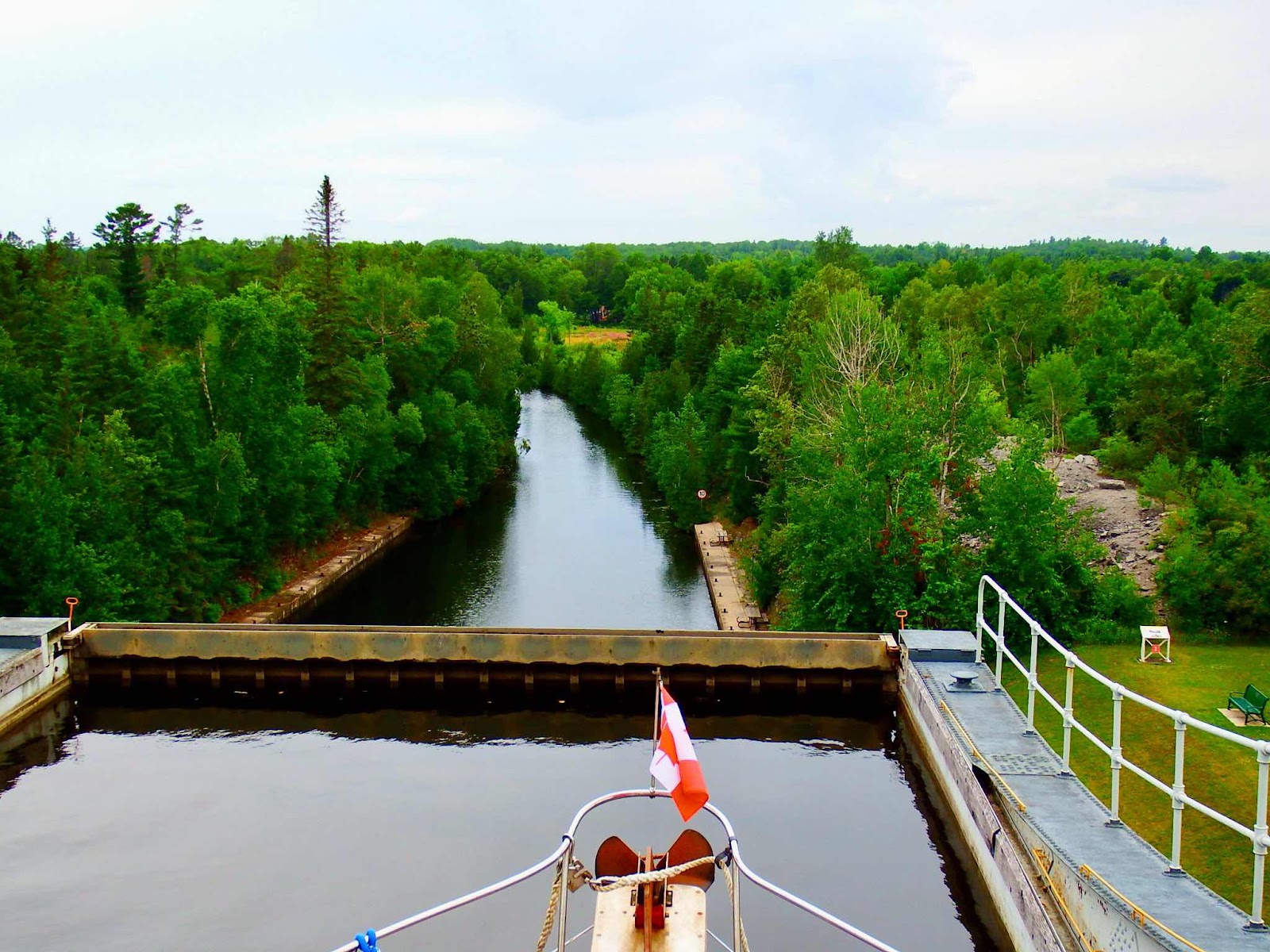
 Kirkfield lock #36.  The goal here is to pilot your boat to the edge of the 50 ft drop off. Yikes, this feels VERY wrong!  I already have a slight issue with heights, but I never thought that fear would come into play while on the boat.  I will admit, my heart was racing a little…how did I end up with helm duty for this?  My strategy is to just focus my attention on the exact location I need to put the boat.  Block out everything else, and just put the boat on the ‘X’…easy peasy!  Be brave!!  As soon as we were secured, and the engine was off, I relaxed and enjoyed the ride.

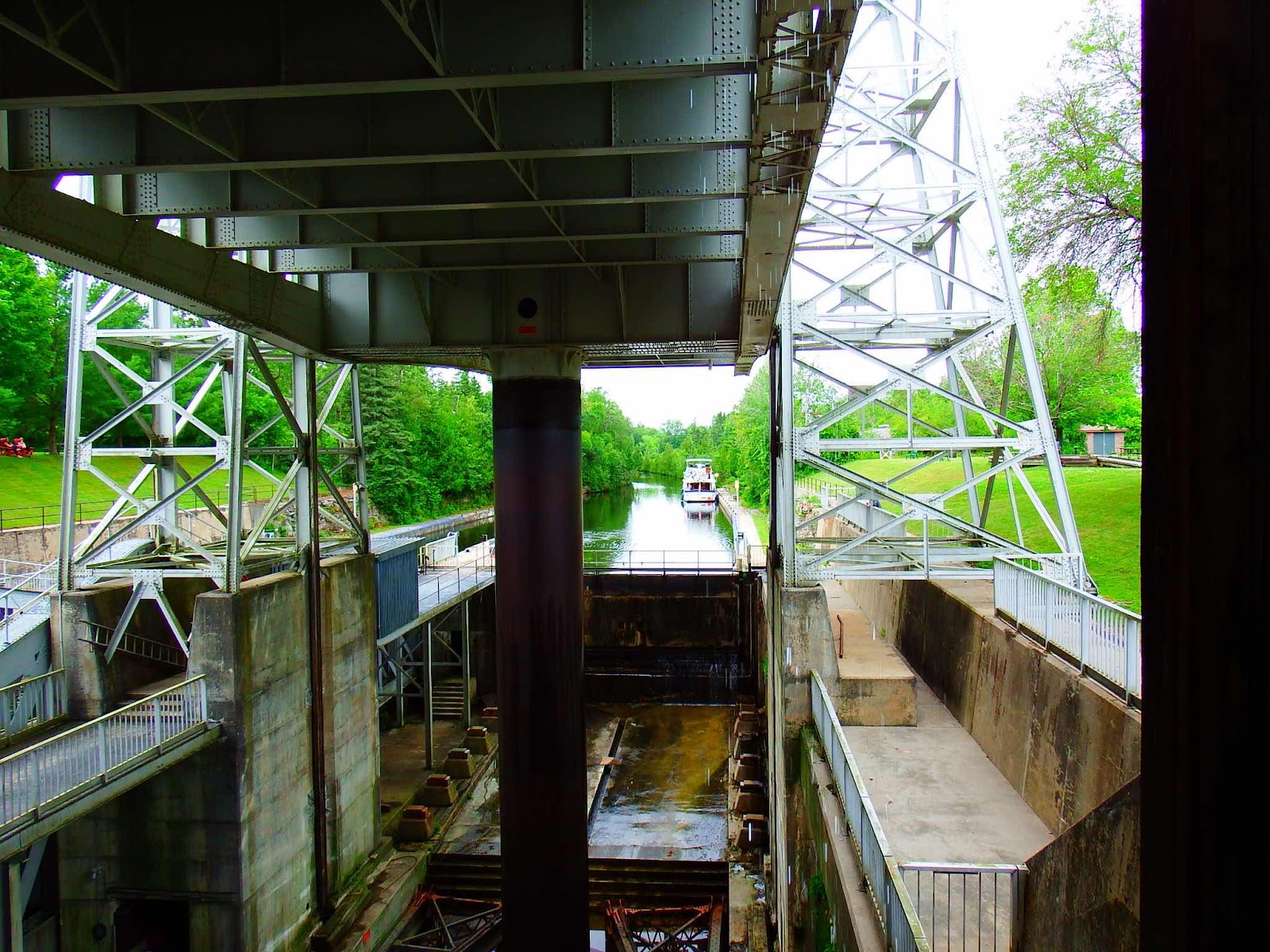
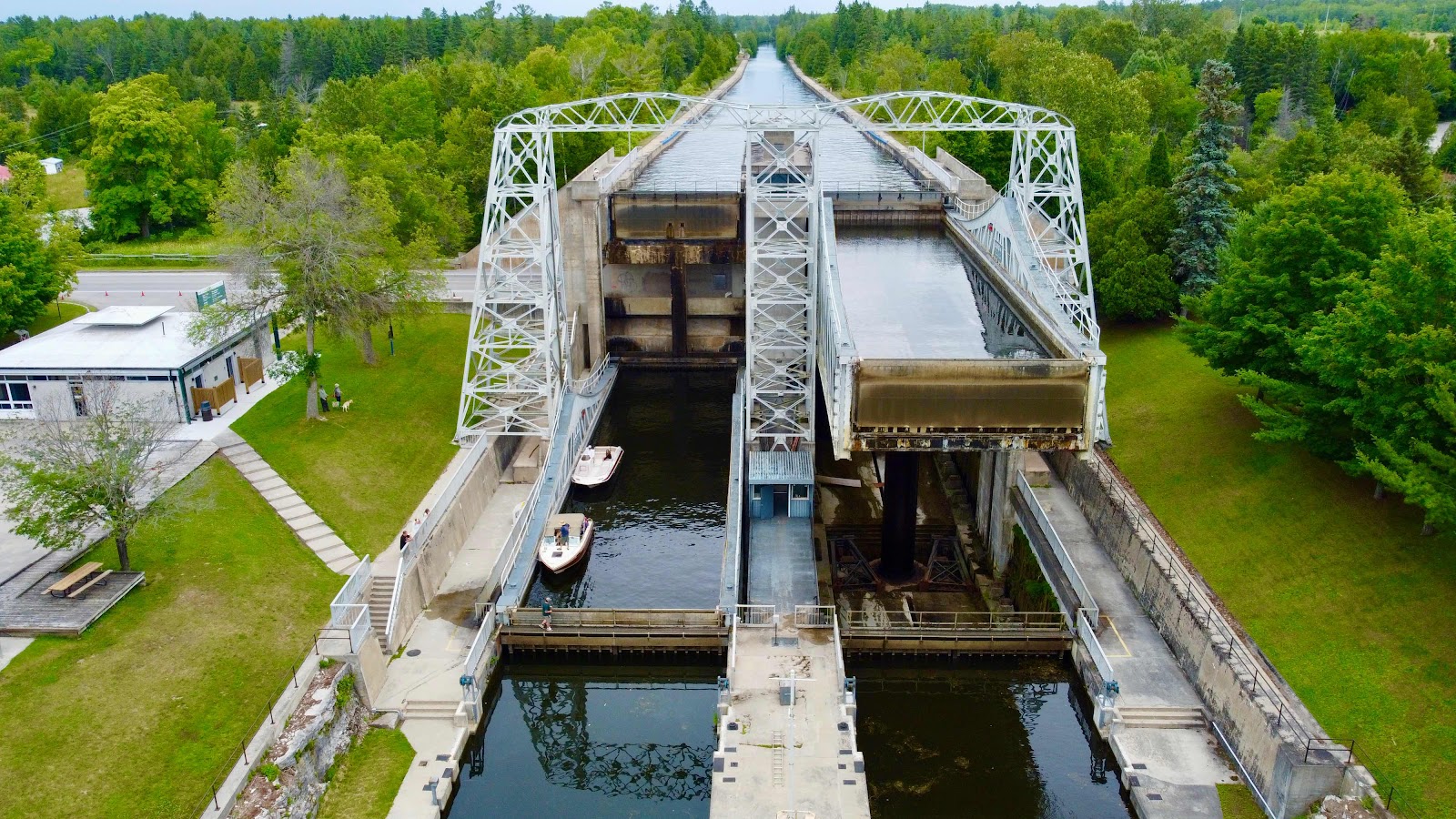
After exiting this lock, we tied to the wall to explore and learn more.  This is the view from under the lift chamber that just brought us down.


I was able to launch the drone for a better angle.

And this is how it works!  If you are interested in learning more, there are numerous YouTube video if you Google Peterborough or Kirkfield Lift locks.

I originally planned to cover the remainder of the Trent Severn Waterway in one post, but there was just too much.  So, an Engineering Marvels pt 2 will be following this post in a day or two.


Monday, July 18, 2022

Old Blog Post

Sorry for any confusion caused by the recent blog post that was mysteriously emailed today, but that post is from September 2021.  We are not on the northeast coast of the US.  We are in Georgian Bay.  I have no idea why FeedBurner resent that post…but hope you enjoy the ‘blast from the past’

Friday, July 15, 2022

Locks Glorious Locks!

We entered the Trent Severn Waterway on July 2.  Our trip thus far has been amazing!  The towns are quaint and welcoming, the people are friendly and very interested in our lifestyle, and the locks range from “this one looks easy” to “are you kidding me!” 


Upon arrival at our first lock I attempted to hail the lock tender on the VHF, no answer.  I then called the phone number listed for this lock and reached a very friendly voice.  I wanted to confirm procedures and clarify a few basic questions.  #1) Should we radio each lock as we arrive to let them know we would like to lock through (this is a must on most other waterways, for both bridges and locks).  Here, the answer was different, and refreshingly easy…”if you are waiting for the lock, just come up to the blue line.  The blue line is only for boats ready to lock through.  If you want to talk with someone it is best to call, as we have a VHF radio in the building, but we are never in the building.  However, we do carry the phone.”


Lock #1…this one looks easy!

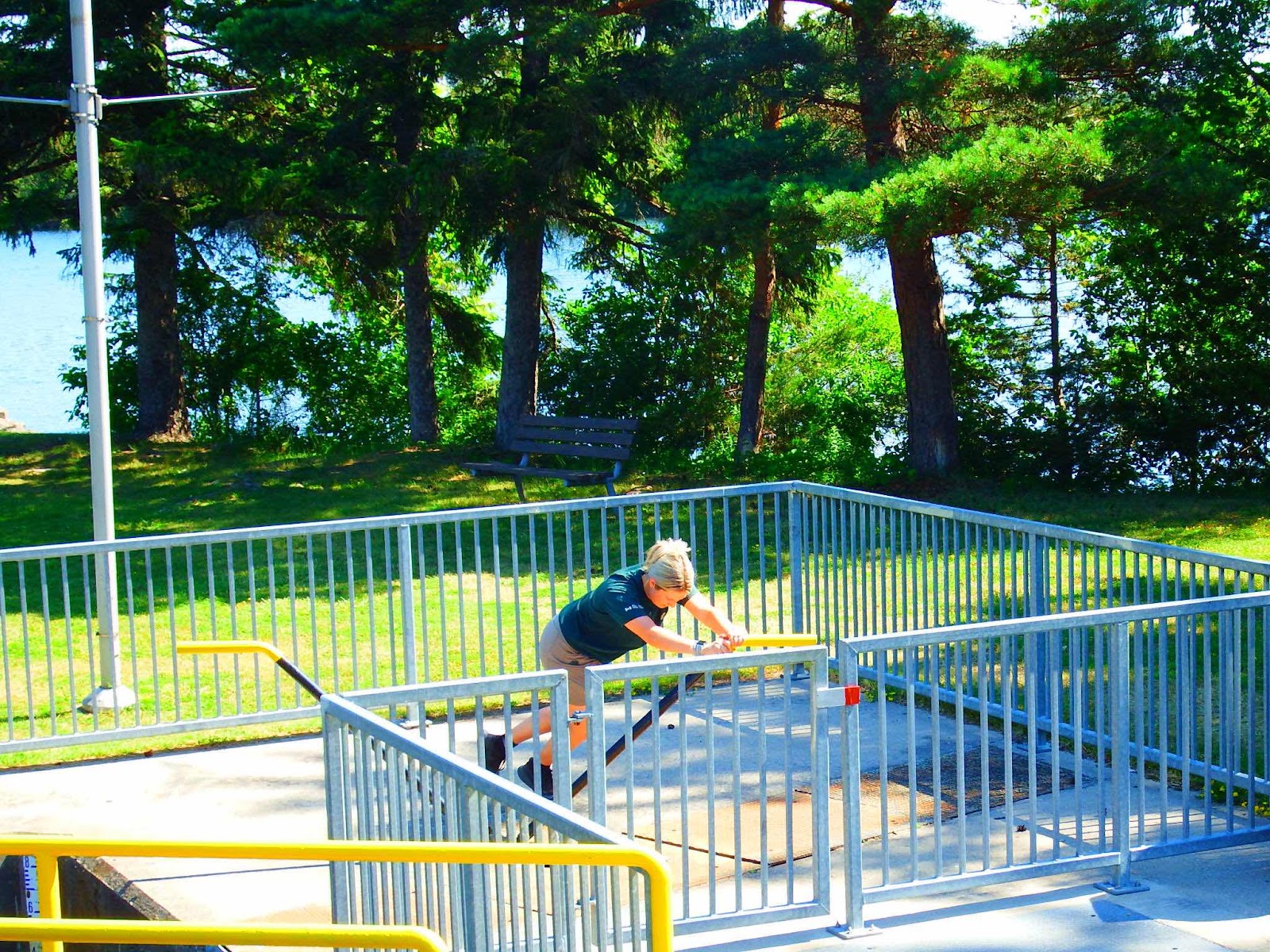
Many of the lock gates are opened manually.

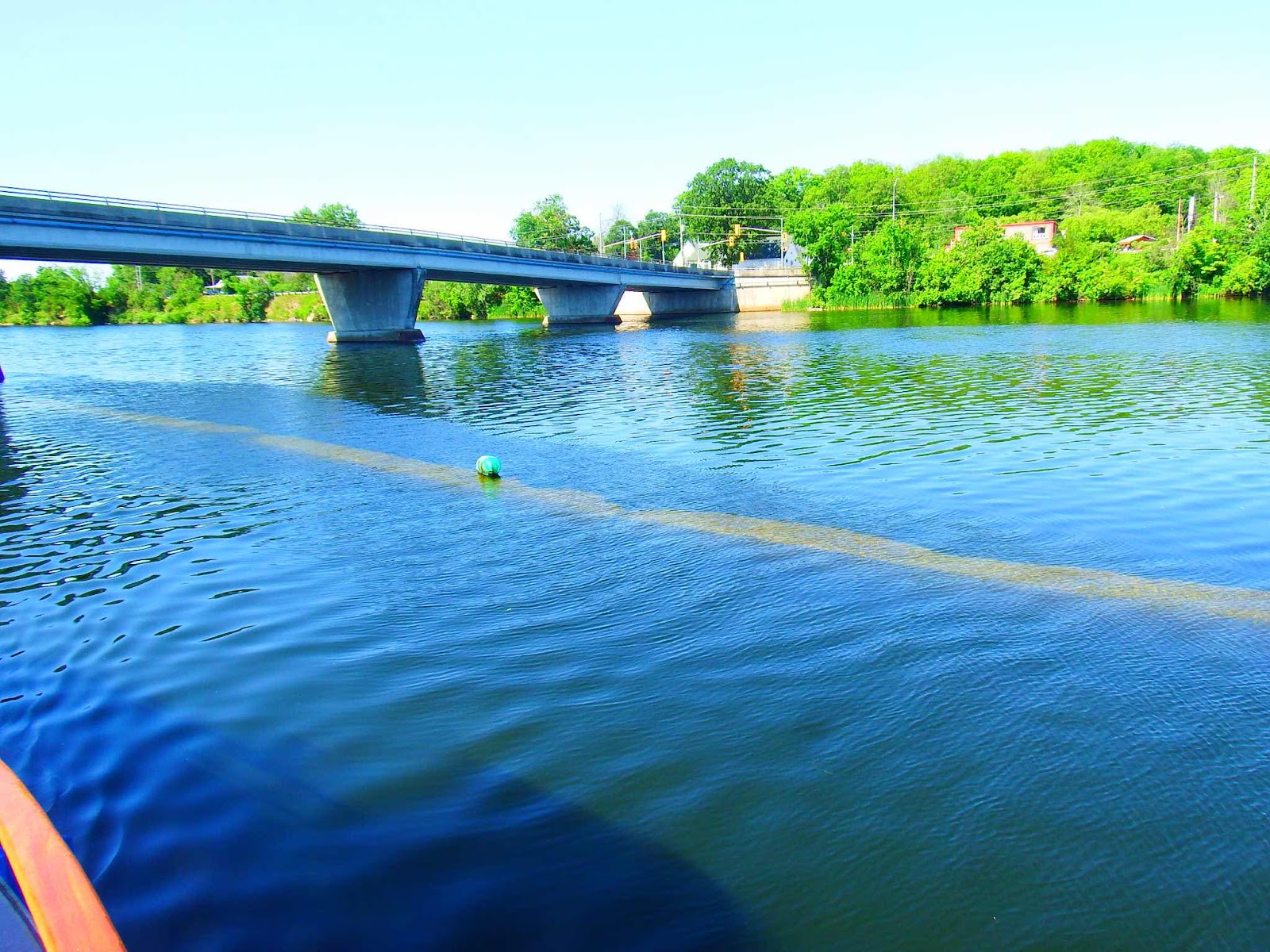
Word of warning…when approaching the lock , STAY IN THE CHANNEL!  Many lock entrance areas have underwater walls (to cut down on current coming from the spillway), but they can be hard to see unless the sun is at the right angle.

And in other places the walls aren’t hidden at all.

This spillway is dumping a lot of water.

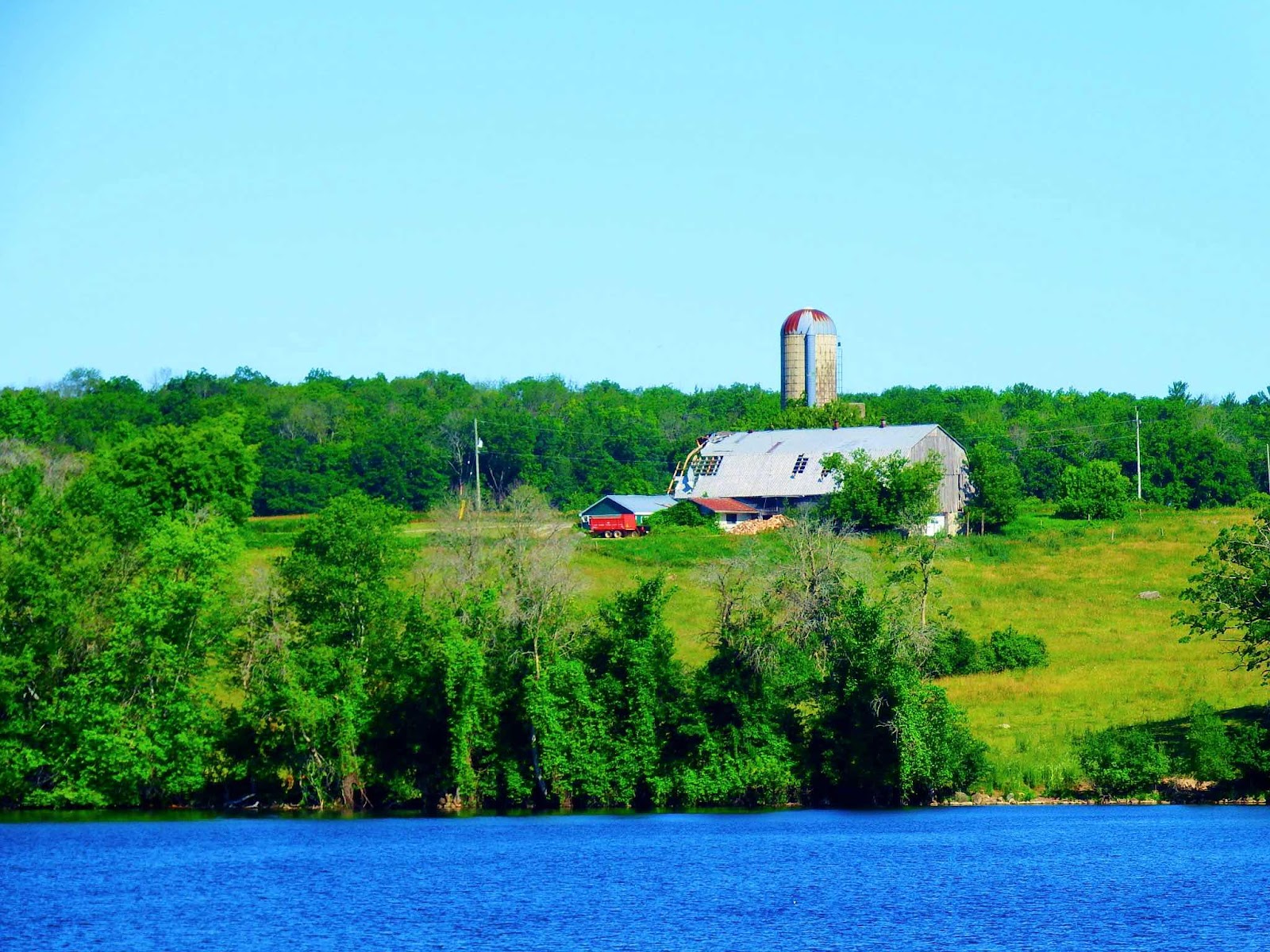
The scenery is beautiful!  I love old barns.


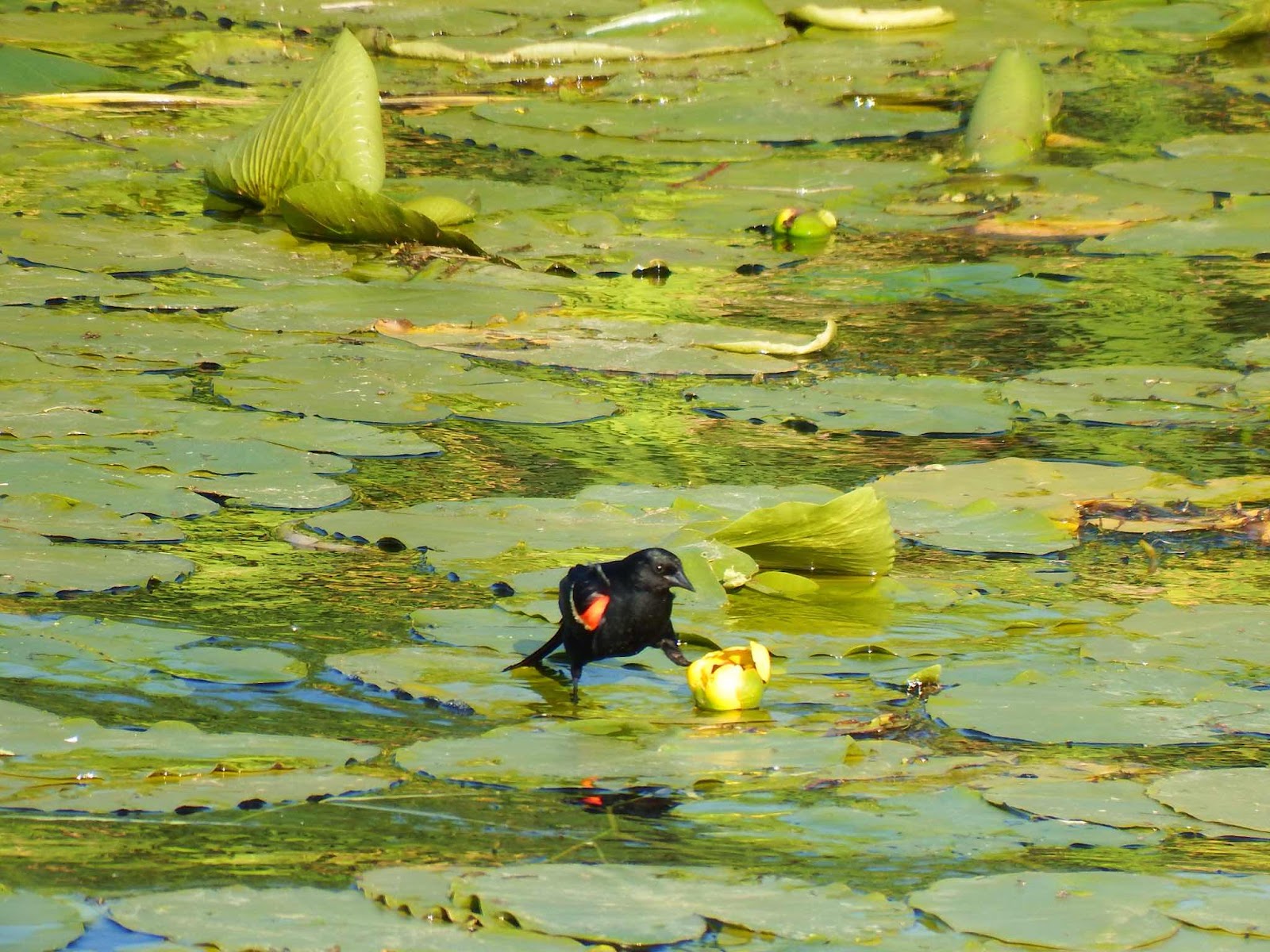
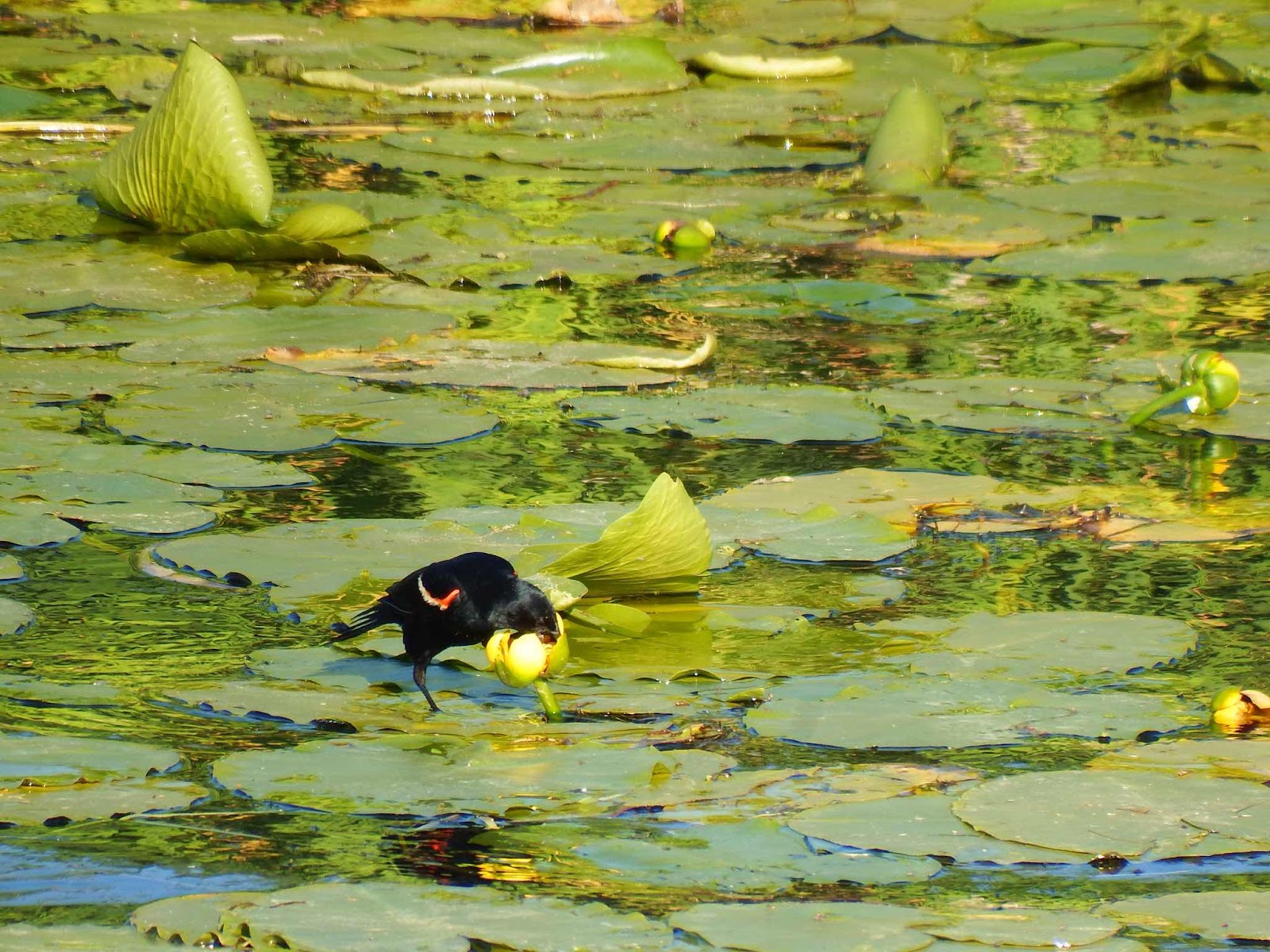
One of the things I love most about this Waterway is the ability to tie to a lock wall if you want to visit a town or socialize, and the numerous opportunities to anchor in beautiful locations to enjoy a bit of peace and tranquility…and nature!  I spent an entertaining evening at anchor watching this red winged blackbird hop across lily pads foraging for dinner. He (only males have the red coloring) frequently pecks at things invisible to me - I’m guessing insects. However, every time he came to a flower bud (which didn’t actually look ready to open) he pried it open with his foot and beak.

I believe he was stealing the seeds.

Welcome to lock 11/12.  This is a first!  This waterway will introduce us to 3 ‘firsts’ (for us) in the area of lock type. The 1st (first) is a Flight Lock, it is actually two locks consecutively stepped together.  This picture shows why it is important to get tied to the blue wall, before they start dumping the water out of the lock.  In tight quarters like this, it is impossible to hold station with the currents created from this surge of water.  At some lock entrances it is easy to stand off in more open water to avoid these currents.

Once the gates are opened, all is calm, and it is easy to enter.  All of the locks on this waterway have cables running down the lock wall, which makes it very easy to secure your line to the cables to keep your boat stationary as the water rises or falls.  Once secure, the water will rise to the level indicated by the black on the walls, then the next set of doors will open, and we will immediately move into the next lock.


This picture was taken from the top of the second lock.  You can see the river about 65 feet below.

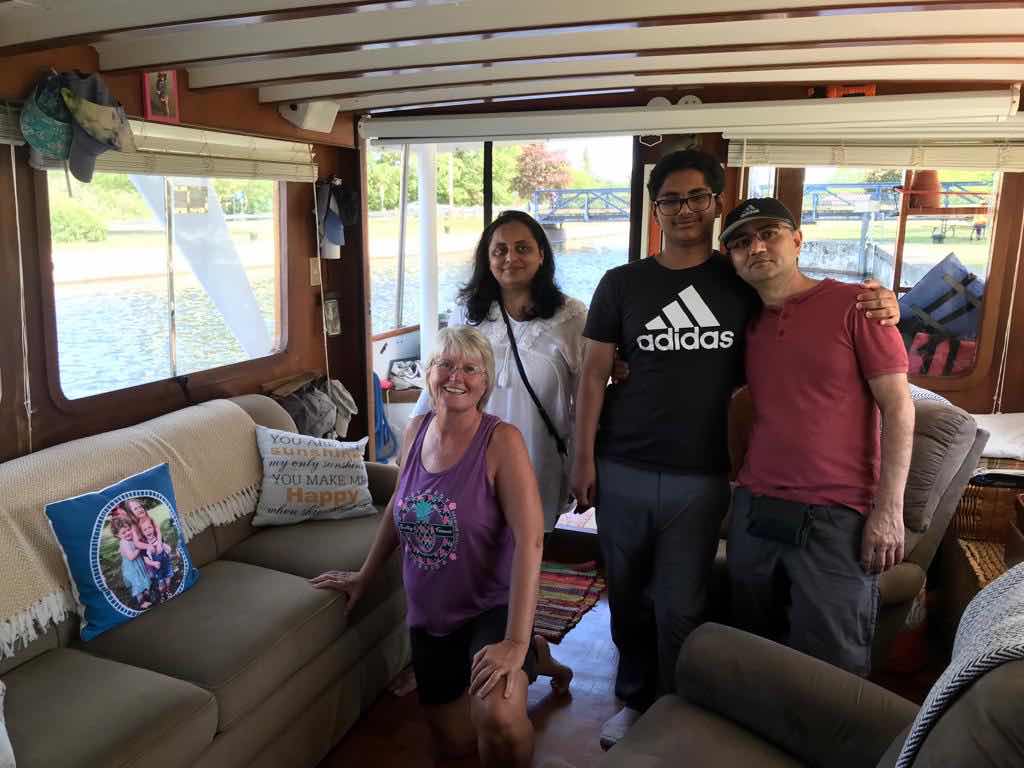
There were a lot of people watching the boats enter the lock, and we noticed a young man flying a drone as we entered the lock.  As it turns out, we met a wonderful family, and they were very interested in our lifestyle.  

Click this link https://vimeo.com/726812750/52297e6755 to see their video.

Our new friends (from left to right) Shital, Vedant, and Prashant. Once we got through the locks we tied to the wall and gave this great family a tour of our boat.


We took a mid day break from traveling to explore the area, and take a nice walk around the park.

A suspension bridge led to the hiking trails on the other side of the river.

That boat is getting ready to turn to port (left) to enter the flight lock.


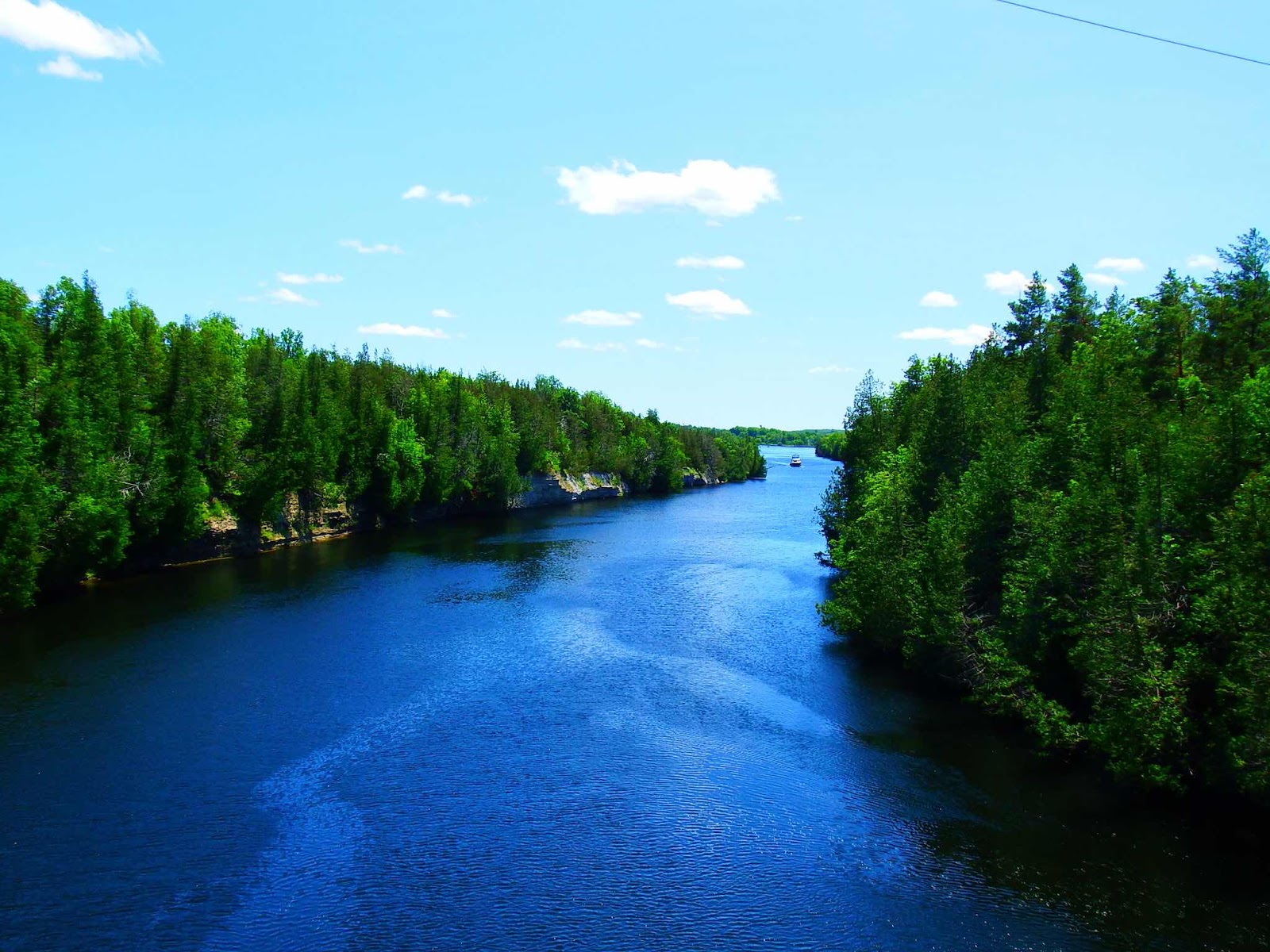
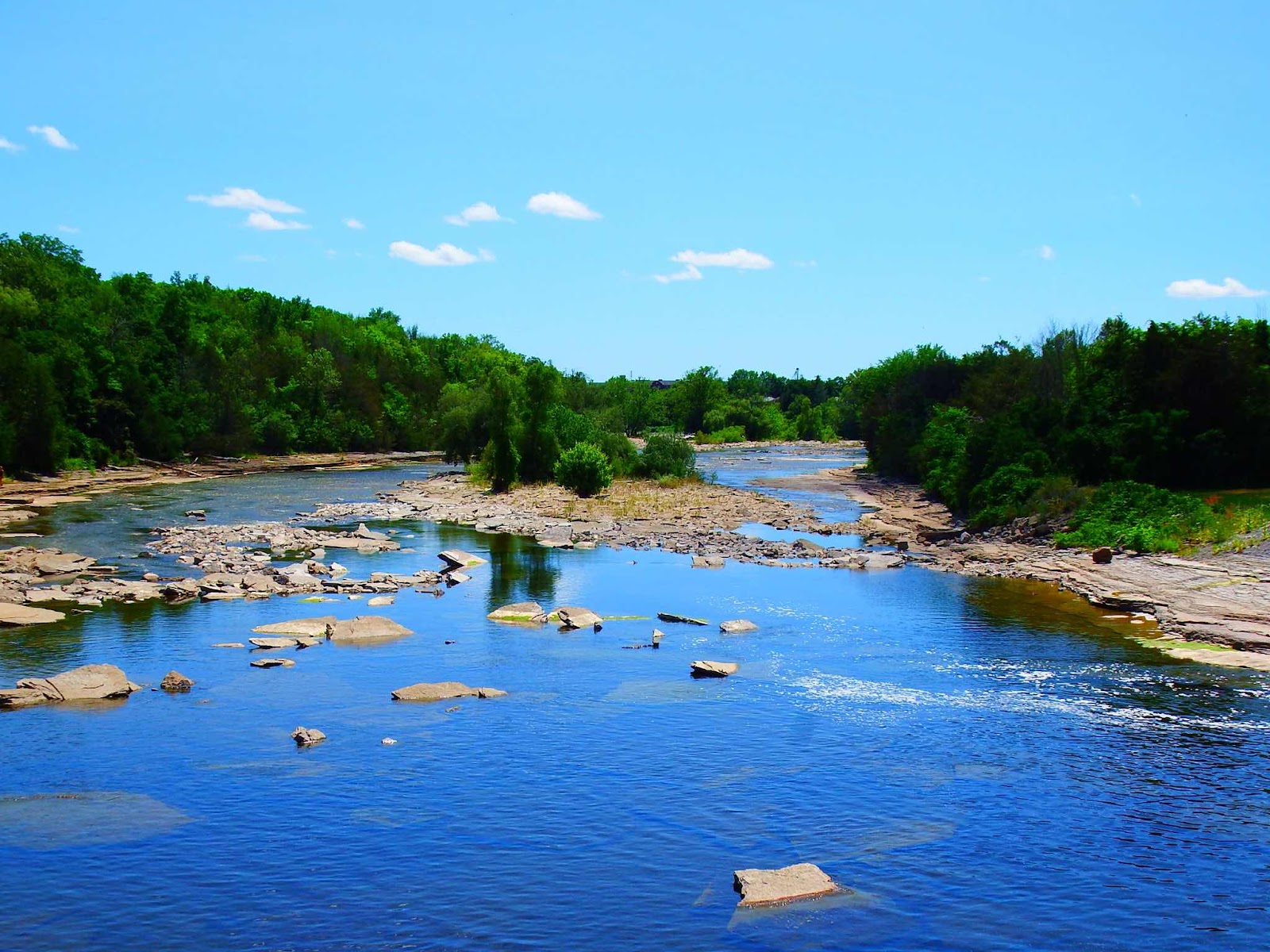
We crossed the dam to head back to the boat.  This river was beautiful from every angle.


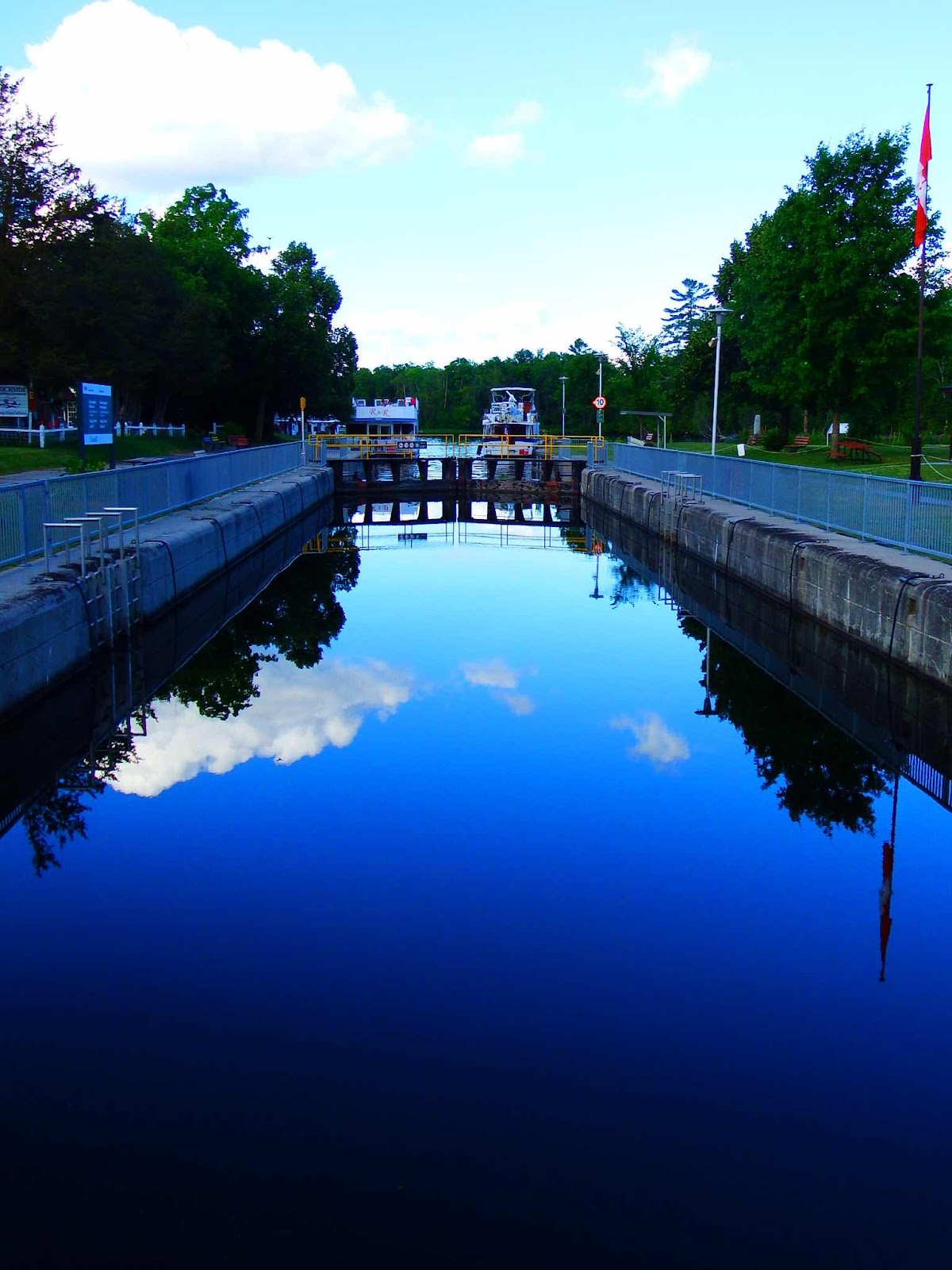
Once underway again, we made it through two more locks before stopping for the night.  This picture is lock #14.

We are currently visiting the town of Oralia, between locks 41 and 42.  We expected to be cruising Georgian Bay by now, but there was a problem at Big Chute (lock 44) last week, and no big boats (over 30 ft) could get through…so, once again, we had to slow down and enjoy the towns, people, and scenery.

Our next post will include lift locks…and the Big Chute…


are you kidding me??


Dominican Republic to Bahamas